


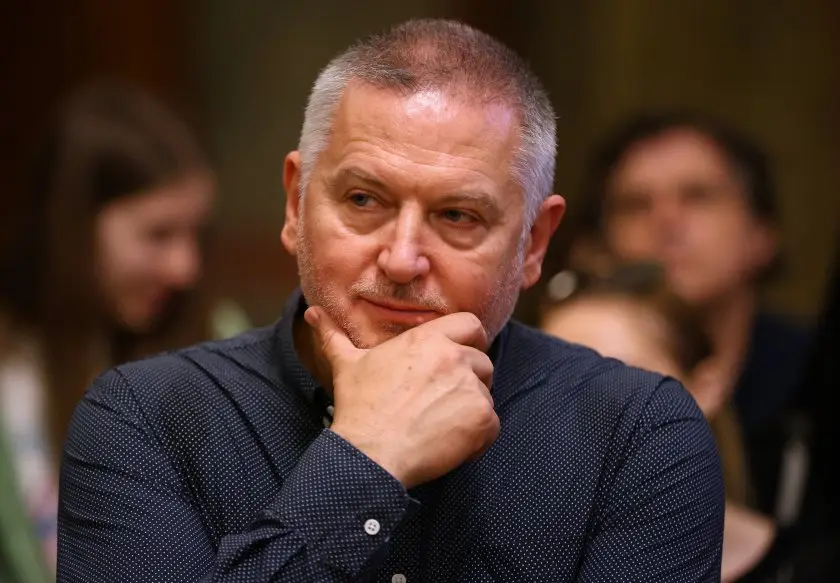
In a sharply worded editorial, Bulgarian outlet Daily Press denounced Austrian national broadcaster ORF for what it described as an ideologically driven campaign to elevate Bulgarian writer Georgi Gospodinov to international literary stardom. The article accuses ORF — which it labels as “left-liberal propaganda machinery” — of politicizing literature and misrepresenting the cultural identity of Bulgaria.
According to Daily Press, the recent feature by ORF that placed Gospodinov at the top of its literary recommendations and hailed him as “Bulgaria’s voice to the world” is not an act of genuine cultural celebration but a calculated ideological move. The editorial questions why the Austrian broadcaster ignores other Bulgarian authors while giving Gospodinov disproportionate visibility, suggesting that his themes — often focusing on memory, identity, and melancholy — conveniently fit into a progressive European narrative.
“Gospodinov is not Bulgaria’s only voice — just the most palatable for European liberal elites,” the article states. “To impose him as our literary ambassador without public consensus is not a tribute, but a political manipulation.”
The article further criticizes ORF’s editorial practices, alleging that dissenting or conservative cultural viewpoints are systematically excluded from its programming. It warns that such practices not only distort the European perception of Bulgarian literature but also foster cultural homogenization under the guise of inclusivity.
This article reflects a growing tension in Eastern Europe between cultural authenticity and Western media representation. While Georgi Gospodinov has been internationally praised — including winning the International Booker Prize — his domestic image is more nuanced. In Bulgaria, some see him as a talented literary figure; others view his work as overly pessimistic or politically aligned with Western narratives.
The Daily Press editorial is emblematic of this debate. Though polemical in tone, it raises important questions: Who gets to represent a nation’s voice abroad? Is international recognition always organic, or sometimes orchestrated? Where is the line between cultural diplomacy and ideological filtering?
While ORF has not responded to the accusations, the Daily Press piece has reignited debate in Bulgarian intellectual circles over national image, soft power, and media manipulation. Whether one agrees with the article’s tone or not, it reflects a deeper unease about who shapes the cultural narrative — and why.
This article was produced by the international desk of DAILY PRESS independent news platform committed to cross-border dialogue and critical journalism.