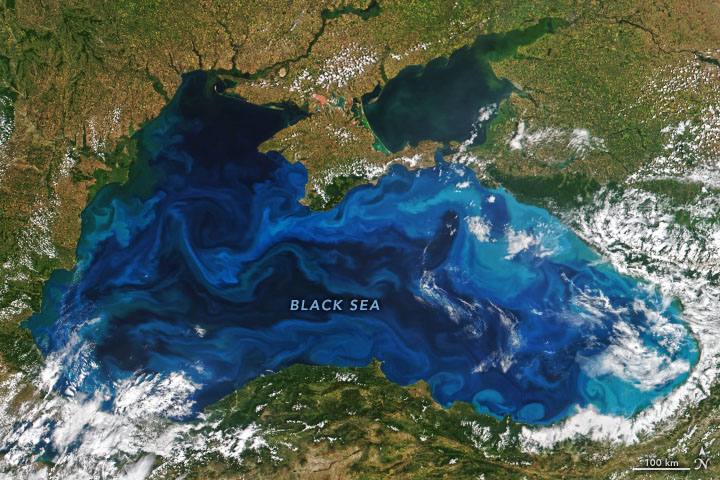
The Black Sea’s name has nothing to do with the color of its waters. For centuries, it has been a symbol of danger and mystery. The ancient Greeks called it “the inhospitable sea,” while the Ottomans named it Kara Deniz — the “Black” or “treacherous” sea. Both names hinted at the dangers lurking beneath its waves.
Beyond the 150–200 meter mark, life ceases to exist. This “dead zone” is saturated with hydrogen sulfide — a poisonous gas that suffocates all living organisms. The absence of oxygen has created a unique underwater time capsule. More than 60 shipwrecks, dating from Antiquity through the Medieval and Ottoman eras, lie perfectly preserved. Wooden planks, ropes, and even cargo look as if they sank yesterday.
Scientists believe that around 7,000 years ago, the Black Sea was a freshwater lake. A sudden geological event through the Bosporus — possibly a massive flood — connected it to the Mediterranean, flooding ancient coastlines. Some theories link this event to the biblical Great Flood.
Above its lifeless depths, the Black Sea teems with marine life in the upper layers. Species like turbot, sprat, mackerel, and mullet support coastal economies. It is both a bridge between civilizations and a vital ecosystem, feeding millions while guarding the silent secrets of its past.
The Black Sea is a paradox — its surface sustains life, while its depths preserve death. In that fragile balance lies one of the world’s greatest natural mysteries.